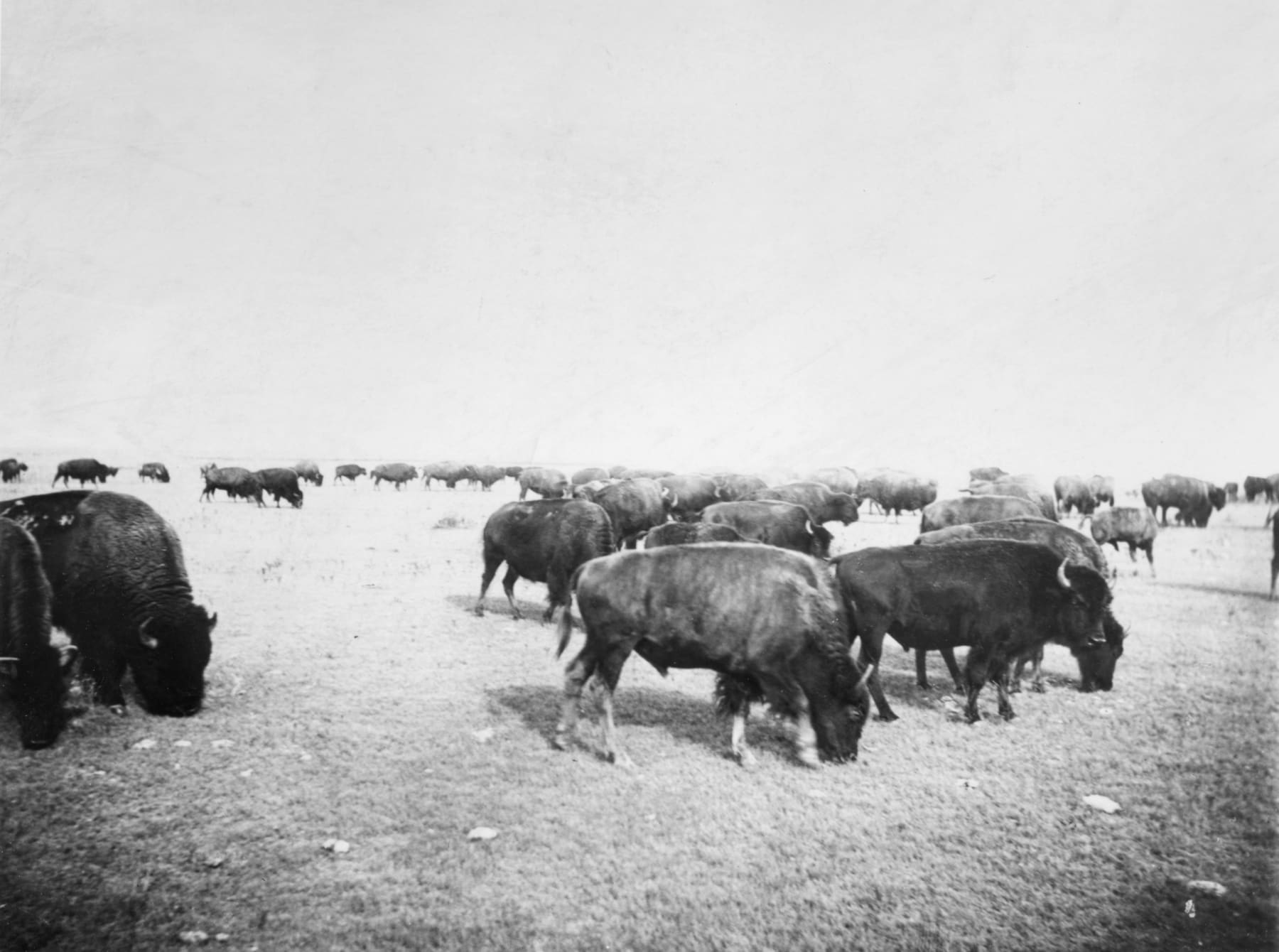
Much of Dallas County is Blackland Prairie with very fertile soil to support grasses like Indiangrass and little bluestem. Forests historically grew in the bottomland near the river, with hardwood species such as oak, elm, hackberry, cottonwood, ash, black willow and pecan. Wild turkeys lived in the forest and out on the prairie, which they shared with bison, black bears and gray wolves. Prehistoric people, later Native American tribes and western settlers all hunted for food and hides.
Early Years / Prehistory to 1873
At the Three Forks
The Trinity River is the key natural feature of Dallas County. It drew pioneers to build cities in the area, and sustained life there for centuries before. Dallas County is crossed by an escarpment of Austin Chalk limestone called the White Rock Cuesta. This ridge rises above the land in several locations. The original Dallas settlement (near today's West End) was carefully chosen at the easiest place to cross the Trinity River. There, the river flows over the ridge, which gives a firm base for crossing the river. That crossing drew travelers long before new settlers arrived in the 1840s.
The term “Three Forks” refers to the place where the main river is formed from the Elm Fork, coming from the north through Farmers Branch, and the West Fork, from Fort Worth. Plants, animals and people all gather near sources of water, so the river and the creeks and streams teemed with life.